Minetap – Merge rpg clicker
- 4.3
- Rating
- 5.00M
- Installs
- Free
- Price

 Analysis by App-foxy
Minetap – Merge rpg clicker caught my attention because it combines two familiar arcade habits: tapping for progress and merging materials into something more useful. After spending time with it, I found a game that is easy to understand within minutes but more dependent on personal tolerance for repetition than its simple presentation first suggests. It is free to start, aimed at players aged Everyone 10+, and comes from Geeky House, a developer that has built a sizeable audience around this particular style of casual play.
The basic appeal is immediate. You tap, collect, combine, craft, and gradually make your mining operation more capable. There is no complicated story to memorize before you can begin, and the controls are comfortable for short sessions. The important question is not whether Minetap works as a quick distraction—it does—but whether its loop continues to feel worthwhile once the first burst of discovery disappears. My answer is qualified: it can earn a regular place on your phone if you enjoy incremental progress, although players looking for constant action or a tightly directed adventure will probably move on.
What the first week feels like
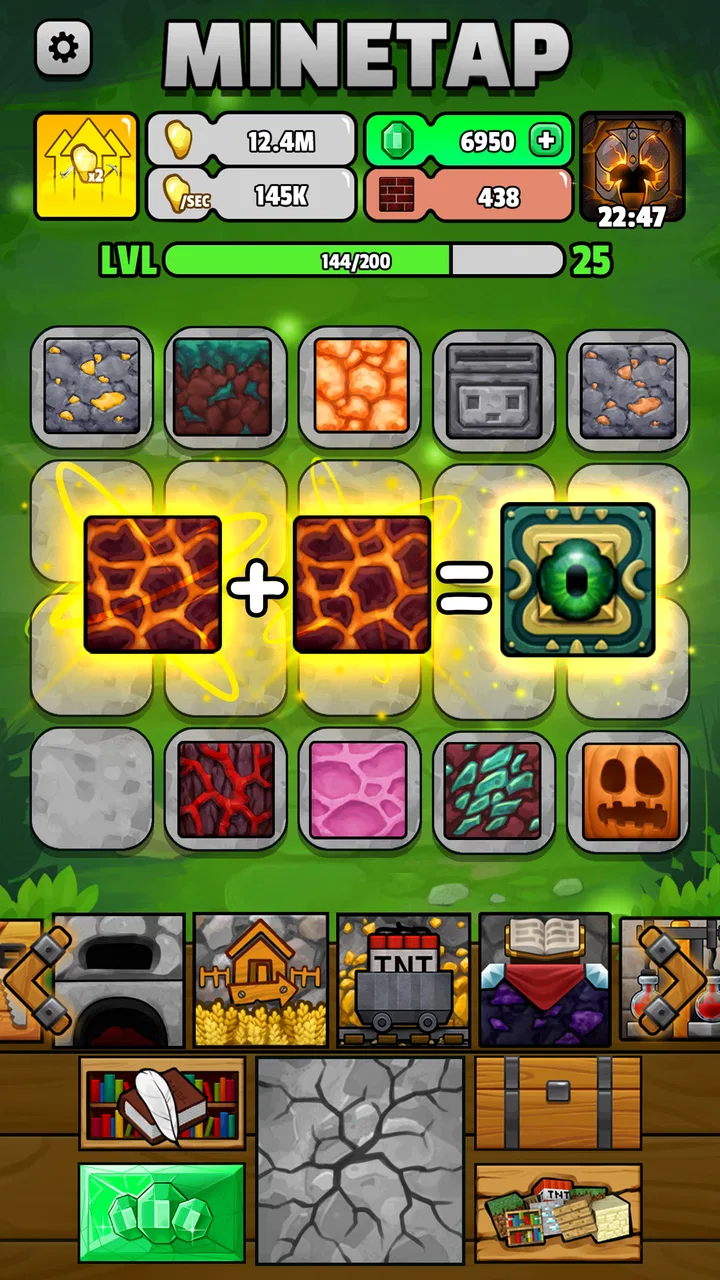
The opening hours are the strongest part of the experience. Every tap appears to contribute to a visible goal, and merging gives the collected materials a second purpose instead of leaving the game as a simple button-pressing exercise. I liked the way the early loop encourages experimentation. You are not asked to master a large control scheme; you are asked to notice what can be combined, decide what deserves attention, and keep turning small gains into larger ones.
You May Also Like

 Blood Strike: 2.5 Anniversary
Blood Strike’s Loadouts Turn Every Drop Into a Tactical Gamble
A close look at Blood Strike’s custom loadouts: how fast access to signature weapons reshapes its battle royale rhythm, rewards preparation, and narrows the gap between fights.

 Pandora - Music & Podcasts
Pandora’s Music Is Easy to Start, but Harder to Recover
Pandora’s strength is its low-effort path from a seed to a station. Its weak spot is how much confidence it asks you to place in connection, setup, and quiet recovery.

 8 Ball Pool
 Is Built on Rivalries, Rematches, and Routine
A close look at the rivalries, rematches, shared routines, and unanswered safety questions that turn a quick pool match into a persistent mobile community.

 Samsung Music
’s Quiet Strength Is Playing What You Already Own
Its reach comes less from spectacle than from dependable access to a personal library. That simplicity is both the app’s strongest retention engine and its ceiling.

 AccuWeather: Weather Radar
AccuWeather Review: A Quick, Clear Forecast for Everyday Decisions
For everyday plans, the best forecast is the one you can understand quickly. AccuWeather makes rain timing, radar, and local conditions easy to act on, with a few trade-offs.

 Hill Climb Racing
Why Hill Climb Racing Still Turns Crashes Into One More Run
A tiny car, a bumpy hill and one more upgrade: Hill Climb Racing keeps resurfacing because its simple chaos makes every near-miss feel personal.
More From Our News Desk



That simplicity makes Minetap particularly suitable for the awkward gaps in an ordinary day. I could play for a few minutes while waiting for an appointment, return later without needing to remember a complicated sequence, and still feel that the session had moved something forward. It also works well when I want a game that does not demand sound, a long uninterrupted sitting, or intense concentration. The arcade classification fits its quick-response presentation, but the progression gives it a calmer rhythm than a traditional score-chasing arcade title.
The first useful habit is to avoid treating every available action as equally important. Early on, it is tempting to spend resources as soon as they appear because the game constantly presents another small improvement. I found better results by pausing briefly and deciding whether a merge or upgrade would improve the next several actions rather than only the current screen. That small change turns the opening from random tapping into a basic resource-management routine.
Crafting adds enough structure to prevent the mining loop from feeling completely flat. It gives collected items a reason to exist beyond immediate accumulation, and it makes the screen feel like a workshop rather than just a counter. Still, the game does not transform into a deep role-playing adventure. The “RPG” flavor is mainly about gradual development and stronger progress, not about a large narrative, demanding tactical combat system, or character-driven campaign. That distinction matters if you are comparing it with a full role-playing game.
Another strength during the first week is accessibility. The minimum operating-system requirement is Android 7.1, so the game is not restricted to only recent Android phones. I would still judge the experience on your own device, especially if you dislike games that keep you returning to the same screen, but the low barrier to entry helps explain why the title has reached over five million installs. Its average rating is 4.3 from around eighty-nine thousand ratings, which matches my impression that the core loop is broadly appealing even though its repetitive nature will not suit everyone.
There is also a practical advantage to the free entry point: you can discover your tolerance for the loop before spending anything. Minetap includes optional purchases ranging from $0.99 to $99.99 per item, so I would not recommend buying immediately during the novelty period. First see whether you naturally want to return after the initial chain of discoveries. If the answer is no, a purchase will not solve the underlying mismatch; if the answer is yes, you can make a more informed decision about whether convenience is worth paying for.
Why merging matters more than tapping
Tapping is the visible action, but merging is where the game gains its identity. Without the combination layer, the experience would be much closer to a conventional idle or clicker title. Merging asks you to think about space, timing, and opportunity cost. Do you combine items now to create a stronger result, or keep separate pieces available because they may be useful in another crafting step? Even when the decision is not especially complex, it gives my hands and eyes something more meaningful to do than repeat one gesture.
A useful approach is to keep a small mental priority list: progress the current objective first, preserve rare or awkward materials when they may unlock a future combination, and only spend surplus resources on less urgent improvements. This is not a hidden cheat or an exploit; it is simply a way to reduce wasteful clicking. Players who rush every merge may advance quickly at first but can also make later sessions feel less organized.
The game is at its best when you treat each session as a short planning exercise. I would start by checking what the current goal needs, then mine only toward that requirement, and finally use the remaining materials for optional progress. That workflow reduces the feeling of being pulled in several directions at once. It also makes returning after a break less confusing because you have a clear next step instead of a pile of unrelated actions.
What remains after the novelty fades
After the first month, Minetap becomes less about discovery and more about routine. The central pleasure comes from watching modest improvements accumulate over repeated visits. This can be satisfying for people who like measurable progress without pressure. I enjoy that kind of rhythm when I am tired and want a game that rewards consistency rather than demanding a perfect performance every time.
Its recurring value depends heavily on whether you like incremental games in general. If you enjoy checking a project, making a few efficient decisions, and leaving it ready for the next visit, the mining and crafting loop can remain pleasant. If you need new environments, changing enemies, or a steady stream of story developments, the same loop will begin to feel like maintenance rather than play. Minetap does not hide that repetition; it builds the experience around it.
For month-to-month use, I would recommend setting a personal stopping point for each session. Without one, tapping can expand to fill whatever time you give it, even when the actual progress is modest. A short visit focused on one crafting target feels purposeful. An open-ended session can turn into a sequence of automatic actions where I am no longer making interesting choices. That is the main difference between using the game as a relaxing habit and letting it become background noise.
The long-term loop is also more attractive for people who like gradual goals than for people who play mainly for completion. There is satisfaction in improving a setup and returning to see what can be combined next, but the reward is cumulative rather than dramatic. You should expect small steps, not a constant stream of major reveals. That makes Minetap easy to fit around other games, although it is unlikely to replace a richer arcade title if you want variety in every session.
One realistic scenario shows where it works best. Imagine opening it during a commute or a lunch break with only a few minutes available. You can check your current materials, perform a planned merge, make one crafting decision, and close the game without losing the thread. Later that evening, you can repeat the process. The game supports this stop-and-start pattern better than an arcade game that requires a full round or a story game that expects uninterrupted attention.
On the other hand, I would skip it if your phone is already crowded with games that compete for daily attention. Minetap’s value comes from returning regularly, and that can make it feel like another obligation when you already have several similar titles. It is also a poor match for anyone who dislikes optional spending prompts or prefers a clearly finished campaign. The free download lowers the risk, but it does not change the underlying design philosophy.
The real maintenance burden
Maintenance in Minetap is not technical work; it is attention management. The game is easy to keep installed, but its progress loop encourages frequent checking. That can be convenient when you want a dependable five-minute distraction, yet it can also create a habit of opening the app without a clear reason. I found that the experience stayed healthier when I chose specific moments to play instead of responding to every impulse.
Resource organization is the second burden. Merging feels clean when the available materials line up with a clear goal, but less satisfying when I have several partial combinations competing for space or attention. The solution is simple: finish one useful chain before starting too many others. This makes the screen easier to read and prevents the game from becoming a small inventory puzzle that I am managing rather than enjoying.
Purchases deserve similar discipline. The price range reaches from $0.99 to $99.99 per item, which is a wide enough spread that I would approach the shop carefully. I would play without spending through the first week, notice whether the game is still enjoyable when progress slows, and only then consider a small convenience purchase if one genuinely improves the way I play. The most important trade-off is not whether spending can speed things up; it is whether speeding up removes the gradual process that attracted you in the first place.
Minetap is free, but “free” should be understood as an invitation to try rather than a promise that every player will experience the same pace. If you are comfortable ignoring optional purchases, the game can remain a low-cost casual pastime. If you feel pressure to buy whenever progress becomes slower, set a firm budget before you begin. That is especially important for a title designed around repeated progress, where small accelerations can be tempting over time.
Version 3.11.4 suggests that the game is still being presented as an actively maintained product rather than an abandoned download. I would still judge updates by how the game feels on your own device and by whether its current progression suits you. A newer version is useful, but it cannot fix the basic question of taste: some players simply do not enjoy repeating a mining, merging, and crafting cycle for months.
Where fatigue begins
The most obvious source of fatigue is repetition. The first taps feel productive because each one teaches you something. Later, the same actions can become automatic. When that happens, the merge system helps, but it does not completely remove the sense that you are performing a familiar routine. I would not call this a flaw in execution so much as the natural cost of building a game around incremental progress.
A second issue is the uneven emotional weight of decisions. Some choices feel meaningful because they create a useful result, while others seem like housekeeping between more interesting moments. If you prefer every action to carry a clear tactical consequence, Minetap may feel too light. Its decisions are best understood as small optimizations, not high-stakes strategy.
The game can also lose appeal for players who want a strong sense of place. Mining and crafting provide a theme, but the lasting motivation comes from the loop itself rather than a detailed world that keeps unfolding. Compared with a traditional arcade game, Minetap offers more progression and less immediate skill expression. Compared with an idle clicker, it offers more active involvement through merging and crafting. Compared with a full RPG, it offers far less narrative and character depth. Knowing which comparison matters to you will make the download decision easier.
I also noticed that the same feature can be either a strength or a weakness depending on the player. The forgiving, low-pressure structure makes it comfortable for casual use, but it also means there is little urgency pushing me to improve my technique. If I want a tense challenge, I would choose a faster arcade game. If I want to relax while still making occasional decisions, Minetap is the better fit.
For that reason, I would avoid playing it in marathon sessions. The game’s loop is more enjoyable in compact visits, where progress feels visible and the repetition has not had time to flatten every action. Taking a break is not a sign that the game has failed; it is probably the intended way to preserve its appeal. Returning with a specific goal makes the experience noticeably better than tapping until I am bored.
Who should make room for it
I would recommend Minetap to someone who likes merge games but wants a mining-and-crafting theme, or to a clicker player who wants a little more involvement than watching numbers rise. It is also a good choice for casual players who prefer flexible sessions, modest planning, and progress that does not require a long evening. The Everyone 10+ rating makes its audience broad, although the repetitive structure is more important to consider than the age label.
I would be more cautious with players who want competitive leaderboards, a substantial story, complex role-playing systems, or constant mechanical surprises. Those expectations point toward other games in the arcade and RPG spaces. Minetap is not trying to be all of those things at once. Its strength is narrower: it turns tapping into a steady project and adds enough merging to make the project feel interactive.
The developer, Geeky House, has a game here that is easy to recommend as a trial because the basic entry cost is zero and the controls are approachable. The audience size—over five million installs—also shows that this compact formula has found plenty of players. I would not use popularity alone as proof of long-term quality, but it does make the game feel like a reasonable starting point if you are curious about this subgenre.
My practical recommendation is to test it in three stages. First, play without spending and see whether the opening loop feels satisfying. Next, return after several days and check whether you have a genuine goal or are opening it purely from habit. Finally, try a short session after the initial excitement has passed. If the small decisions still feel pleasant, Minetap may have lasting value for you. If the actions already feel like chores, no amount of early progress will change that judgment.
In the end, Minetap – Merge rpg clicker earns space on my phone as a compact, low-pressure arcade game rather than as a complete role-playing experience. Its best qualities are the clear mining loop, the extra thought introduced by merging, and its ability to fit naturally into short breaks. Its weaknesses are equally clear: repetition, routine resource handling, and the risk that optional purchases can distract from the slow satisfaction of progress.
I would keep it installed for players who enjoy building momentum through small actions and who are comfortable treating it as a brief daily habit. I would remove it quickly if I wanted variety, intensity, or a story-led adventure. The long-term verdict is therefore positive but specific: it deserves a lasting place only when the routine itself is the reward. For that audience, the free download is worth trying; for everyone else, the first week will probably reveal the answer soon enough.
FAQs for Minetap – Merge rpg clicker
01What is Minetap – Merge rpg clicker?
Minetap – Merge rpg clicker is a casual RPG and idle-style mining game built around tapping, merging, crafting, and upgrading. You collect resources by mining, combine similar items to create better equipment or materials, and use your progress to explore deeper areas. The game is designed for short sessions, but its upgrade system gives you reasons to return regularly and continue improving your character.
02How does the gameplay in Minetap – Merge rpg clicker work?
The main gameplay loop combines clicker mechanics with merge-based progression. You tap to mine or gather resources, then merge matching objects to produce stronger tools, weapons, or useful materials. Upgrades help you mine more efficiently and advance through new stages. Although the controls are simple, managing resources and deciding which items to merge first adds a small strategic element to the otherwise relaxed experience.
03Can Minetap – Merge rpg clicker be played offline?
Many parts of Minetap – Merge rpg clicker can generally be enjoyed without a constant internet connection, especially the basic mining, tapping, and merging activities. However, some features may depend on online access, including advertisements, cloud-related functions, events, updates, or purchases. Offline availability can also vary between versions, so it is worth checking the app’s current store description before relying on it during travel.
04Is Minetap – Merge rpg clicker free to download and play?
Minetap – Merge rpg clicker is typically available as a free download, allowing players to start mining and progressing without an upfront payment. Like many mobile clicker and merge games, it may include optional advertisements and in-app purchases for bonuses, resources, or faster progression. You can play without spending money, but patience may be needed if you want to unlock upgrades at a slower, completely free pace.
05Is Minetap – Merge rpg clicker suitable for children and casual players?
The game is easy to understand because its core actions rely on tapping, dragging, merging, and upgrading. This makes it accessible to casual players and younger audiences who enjoy colorful progression games. Parents should still review the listed age rating, advertising settings, and in-app purchase options before allowing children to play. The amount of repetition and optional spending may not suit every player.
Pros
- Simple merge mechanics are easy to learn and play with one hand.
- Short sessions make it suitable for quick breaks or commuting.
- Frequent rewards help maintain a steady sense of progression.
- The fantasy theme gives the mining and crafting loop extra charm.
- Offline-friendly moments let you progress without constant internet access.
Cons
- Progress can become repetitive once the early discovery phase is over.
- Higher-level upgrades may require considerable grinding or patience.
- The small interface can feel crowded on phones with compact screens.
- Randomized rewards may make specific equipment upgrades unpredictable.
- Ads or optional purchases can interrupt the otherwise relaxed gameplay.

Minetap – Merge rpg clicker
Gallery